
Press brake manufacturing combines a load-bearing structure, drive system, guided ram, back gauge, tooling interfaces and controls into a machine that must work as one system. For a buyer, the useful question is not simply whether a supplier owns a factory: it is how the quoted machine is built, checked and supported. This guide maps manufacturing stages to evidence you can request. It describes a review framework, not a claim that every factory follows the same process or that every option is included in a Rucheng quotation.
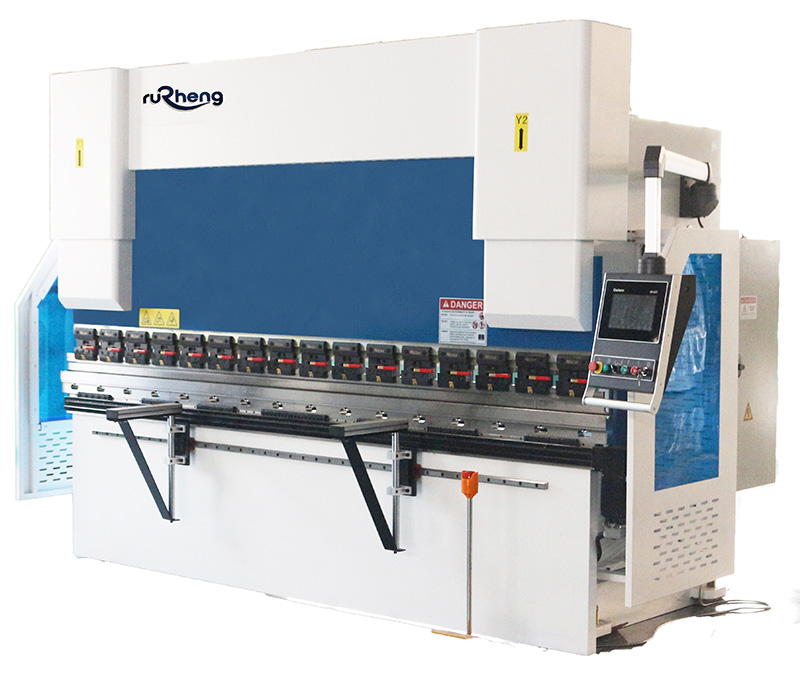
From specification to completed machine
| Manufacturing stage | Evidence to request |
|---|---|
| 1. Engineering and supply scope | An agreed model specification, part requirements and a list of included options. Identify the manufacturer, exporter and party responsible for commissioning. |
| 2. Frame fabrication and machining | The proposed frame construction, material specification, stress-control method where applicable, and dimensional inspection records. Ask which operations are performed in-house or subcontracted. |
| 3. Drive and mechanical assembly | Identification of the installed drive components, ram guidance, back gauge and tooling holders. Request alignment and functional inspection records for the quoted machine. |
| 4. CNC and electrical integration | The controller model, named controlled axes, software licenses, electrical drawings and agreed supply voltage. A controller brand alone does not specify installed machine functions. |
| 5. Calibration and quality checks | Recorded checks of positioning, crowning where fitted, and representative bends using defined material, tooling and measurement methods. Separate axis accuracy from finished-part tolerances. |
| 6. Acceptance and handover | An agreed factory acceptance report, unresolved-item list, manuals, backups, spare-parts information and packing details. Define installation and site acceptance separately. |
How to assess press brake frame manufacturing
Ask how the supplier controls geometry through fabrication and machining, and which records apply to your machine. A photograph of a large machining center is not evidence of the complete process. LVD describes stress relief and single-setup frame machining for its PPED range; that is a model-specific example, not a universal production specification.
Why assembly matters beyond the controller
Compare the complete configuration, including the back gauge, compensation system, tooling and software. Bystronic discusses frame-deflection and temperature compensation as interacting features of CNC bending. Ask for evidence on the delivered configuration rather than assuming an advanced control automatically includes every axis or compensation feature.
Custom and OEM press brake manufacturing
Separate changes such as color or branding from engineered changes to bending length, stroke, daylight, tooling, automation or electrical supply. Request a written feasibility review, revised specification, responsibility for documentation and acceptance criteria. OEM or private-label availability, lead time and service scope require confirmation for the proposed order.
Turn quality control into an acceptance record
For each agreed sample, record material grade, thickness, bend length, punch and die, measurement positions and results. Include a long part when long-profile consistency matters and a return-flange part when access is important. These are proposed test scenarios, not proof of maximum capacity. Agree the acceptance limits before testing.
Manufacturing questions
Does a press brake manufacturer need to make every component?
No. Purchased controllers, drives or tooling do not by themselves determine machine quality. Verify who specifies, integrates, inspects and supports the complete machine, including any subcontracted work.
Does a factory tour replace an acceptance test?
No. A tour helps identify facilities and processes. Acceptance requires records for the agreed configuration and test conditions on the actual machine supplied.
Discuss your manufacturing requirements
Send material grades, thickness range, longest bend, part drawings, production needs and workshop voltage. Add required tooling, controller functions, acceptance tests and any customization so the quotation can separate standard supply, options and exclusions.
Request a Press Brake QuoteTechnical references
The linked manufacturer sources describe their own products. They do not establish Rucheng's production methods, certifications or included equipment.