
Press brake tooling is not interchangeable just because the machine tonnage, V opening or advertised tooling style matches. Confirm the punch-to-clamp and die-to-holder interfaces separately, then review the complete assembly for height, clearance, retention and load limits. Before ordering a new machine or a retrofit, obtain written approval for the actual tool and holder part numbers.
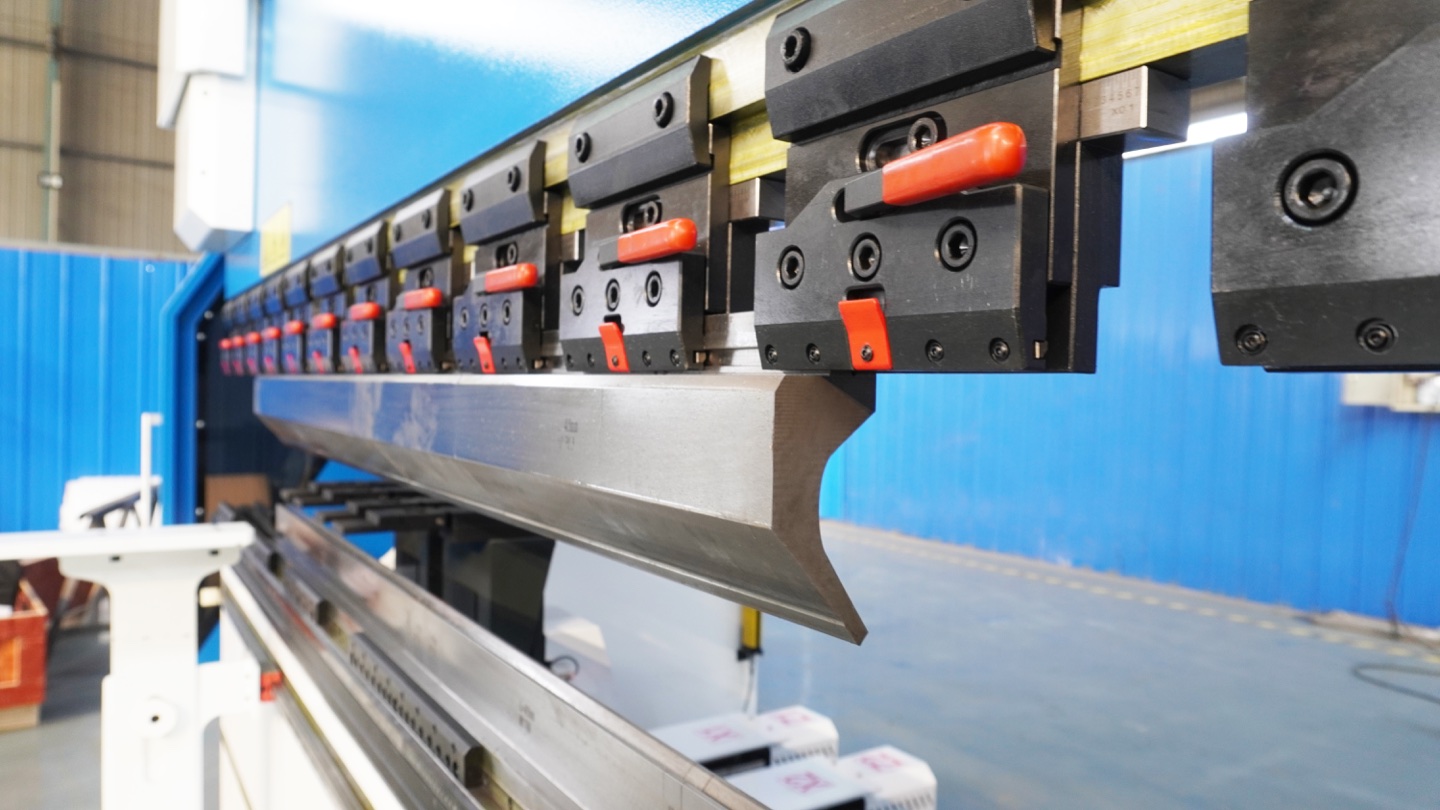
Do European, American and New Standard tools interchange?
Treat a tooling-style name as a starting point, not an acceptance criterion. WILA identifies systems by tool-tang geometry and distinguishes the upper and lower interfaces. Wilson Tool separately lists European, American and WT-style tooling. Neither a machine brand nor a familiar profile name establishes that a particular punch, die and clamp combination fits.
Manufacturer references: WILA: Tool tang; Wilson Tool: Bending tooling.
Check three interfaces before comparing prices
| Interface | Evidence to request | Do not assume |
|---|---|---|
| Punch to upper clamp | Dimensioned tang drawing, seating and load-bearing surfaces, centerline, retention feature and permitted insertion direction. | A gooseneck shape or similar tang width proves compatibility. |
| Die to lower holder | Die-base drawing, holder slot, seating surface, centerline and the specified support arrangement. | Matching V openings mean matching die bases. |
| Holder or adapter to machine | Ram/table interface drawing, attachment requirements, installed height and supplier-approved load path. | A holder approved for one machine fits another machine of the same tonnage. |
Does an adapter solve the problem?
An adapter can be an option when its manufacturer approves both interfaces. It is not a universal converter. Review the assembled working height, available opening, stroke, part clearance and each component's load conditions. A clamp's actuation method, such as manual or hydraulic, does not by itself identify the tool interface. Retention and tool-changing procedures must follow the specific equipment instructions; this checklist is not an installation procedure.
Example: reuse tooling on a new 3200 mm press brake
Suppose a buyer owns segmented punches and dies and wants to reuse them on a new 3200 mm machine. Matching the overall tooling length answers only one question. Ask the suppliers to compare the actual cross-sections, confirm the proposed holder/adapter assembly, and review representative parts with that assembly. Quote any required new tools separately. This is a hypothetical purchasing example, not a confirmed Rucheng configuration or a customer case.
A compatibility review record for the quotation
| Record item | What the proposal should state |
|---|---|
| Identification | Machine model and revision; punch, die, clamp, holder and adapter part numbers; drawing revisions and the supplier responsible for approval. |
| Geometry | Interface drawings, tool heights, assembled height, usable segmented lengths, alignment references and part-clearance review. |
| Load and handling | Rated loads with units and conditions for every component; permitted tool orientation, retention, handling and installation documentation. |
| Acceptance and supply | Representative material and part drawings, agreed inspection criteria, supplied versus reused items, exclusions and itemized prices. |
Mark an unknown interface as unconfirmed rather than filling the gap with a generic standard label. Ask for a corrected proposal when an adapter, tool height or part number changes. Physical fit alone does not demonstrate acceptable finished-part accuracy or load capacity.
Send the tooling information with your machine inquiry
Send Rucheng the existing tooling list, dimensioned sections or manufacturer drawings, machine information and representative finished-part drawings. Include material, thickness, bend length and surface requirements. Request a written compatibility review and separate prices for the machine, holders, adapters and replacement tooling; availability and suitability must be confirmed for the proposed configuration.
Send press brake quote requirementsTooling compatibility questions
Can I identify the tooling standard from a photograph?
A photograph can help locate markings and visible features, but it does not replace dimensioned interface drawings, model identification and supplier confirmation.
Does hydraulic clamping accept any press brake punch?
No. Hydraulic describes how the clamp is actuated, not a universal tang geometry. Confirm the exact clamp model, approved tools and retention requirements.
Do matching punch and die heights prove compatibility?
No. Height is only one check. The interfaces, centerlines, working clearance, retention and component load limits still need review for the complete assembly.