
A CNC press brake automation cell uses a robotic arm, grippers, sheet support, sensors and software to load, position, bend and unload repeat sheet metal parts with less manual handling. Robotic bending usually wins in repeatability, labor efficiency and safety for stable production, while manual bending still wins for prototypes, urgent changes and shops that need maximum flexibility with minimum upfront cost.

Robotic CNC press brake cell for automated loading, bending, and unloading
That simple answer is useful, but buyers need more than a headline. The real question is not whether automation is “better” in general. The real question is whether your mix of parts, labor availability, quality target, and batch size justify moving from an operator-led process to a robotic bending cell.
Quick answer: choose press brake automation when the same part families return every week, bending is a bottleneck, labor is difficult to schedule, and blanks are stable enough for robotic handling. For a practical recommendation, send drawings, material, blank size, part weight, batch size and cycle target through the press brake quote form.
In this guide, we compare robot bending and manual press brake work in the areas that actually affect purchasing decisions: labor, throughput, consistency, setup time, part mix, safety, floor space and return on investment. We also explain where a robotic press brake makes sense, where a standard CNC press brake with skilled operators is still smarter, and when a press brake sheet follower is enough without a full robotic cell.
1. What Is CNC Press Brake Automation?
CNC press brake automation is a bending system where the machine is integrated with a robot, part grippers, sensing devices, sheet support and production software. Instead of the operator manually lifting the sheet, aligning it to the back gauge, rotating it between bends and stacking the finished part, the robot handles those repetitive movements according to a programmed sequence.
A typical automation cell includes five core elements: the press brake itself, a robot arm, gripping tooling, bend-angle or positioning sensors, and offline programming software. Higher-end cells may also include automatic tool changers, CNC sheet followers, pallet systems, conveyor output, sheet separators, and MES or ERP connectivity.
The goal is not just less labor. The goal is stable bending output: same handling path, same part orientation, same sequence timing, and lower operator-to-operator variation across every shift.
CNC Press Brake Automation Configuration Options
Buyers often ask for a robotic press brake without knowing which automation level is actually required. A better approach is to match the automation package to the part family, blank weight, surface quality and daily production target.
| Automation level | Typical configuration | Best fit | Quote impact |
|---|---|---|---|
| Operator-assisted CNC bending | CNC press brake, 4-6 axis backgauge, crowning, quick clamps | High-mix sheet metal shops, cabinets, brackets and general fabrication | Lowest automation cost and fastest delivery |
| CNC press brake with sheet follower | Servo front support, roller table or synchronized sheet follower | Long panels, stainless covers, facade panels and awkward blanks | Adds support cost but avoids full robot integration |
| Robotic bending cell | Press brake robot, grippers, safety fence, pallets, offline programming | Repeat brackets, enclosures, frames, shelves and medium-batch parts | Higher investment; ROI depends on repeat production hours |
| Automated bending line | Robot cell plus conveyors, part separation, stacking, barcode or MES link | Standardized production with predictable order flow and shift targets | Highest integration cost; quote requires layout and cycle-time review |
If the main problem is supporting large sheets during manual bending, a sheet follower may solve it. If the main problem is labor availability and repeated handling on the same parts, a robotic press brake cell becomes more logical.
2. Robot Bending vs Manual Operation: Quick Comparison
| Factor | Manual Press Brake | Robotic Press Brake Cell |
|---|---|---|
| Initial investment | Lower | Higher |
| Labor requirement | 1–2 operators at the machine | 1 operator can supervise one or more cells |
| Cycle time stability | Depends on operator pace and fatigue | Highly stable on repeat jobs |
| Part consistency | Operator-dependent | High repeatability |
| Small-batch flexibility | Excellent | Moderate unless jobs repeat |
| Large-part handling safety | Higher manual risk | Better for heavy and awkward parts |
| Programming demand | Lower software demand, higher operator skill demand | Higher programming demand, lower repetitive manual handling |
| Best fit | Prototype, repair, short-run fabrication | Repeat orders, standard parts, labor-constrained factories |
The table makes the main trade-off clear: manual bending optimizes flexibility and low entry cost, while automation optimizes predictable output and labor efficiency. Neither is universally right. The winning choice depends on job structure, not marketing claims.
3. Where Automation Delivers the Biggest Advantage
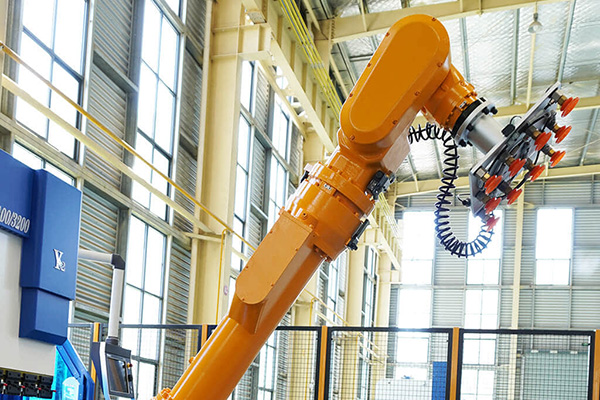
Robotic arm improves repeatable handling on multi-bend and high-volume parts
3.1 Labor efficiency and staffing pressure
Many sheet metal factories start looking at automation because skilled press brake operators are hard to hire and even harder to retain. A robot does not eliminate people, but it changes how people add value. Instead of spending the shift loading sheets and rotating parts, operators move toward setup verification, programming, quality checks, and cell supervision.
For shops running repeated parts every week, one robotic cell can often replace the most repetitive work of one full-time operator and partially reduce dependence on a second helper for large sheets. That does not mean zero labor, but it often means more output per available operator.
3.2 Stable cycle time and predictable planning
Manual bending speed changes with operator experience, material handling difficulty, and fatigue over the course of the shift. A robot tends to repeat the same path and timing. That makes production planning, quotation accuracy, and shift balancing easier—especially for standard brackets, cabinets, frames, elevator parts, shelves, and enclosure components.
3.3 Better consistency on multi-bend parts
Automation matters most when a part requires multiple re-orientations, tight bend-angle consistency, or strict presentation quality. The robot grips, rotates, and positions each part in a controlled way. Combined with angle measurement and crowning, this reduces the variation that often appears when different operators handle the same part in different ways.
3.4 Safer handling of heavy or awkward sheets
Large, thin, or awkward sheets are a poor match for manual handling near the punch and die area. Robotic handling reduces repeated lifting, awkward turning, and crush exposure. That is one reason automation is attractive for cabinets, long channels, and parts that require frequent flips during the bend sequence.
4. Where Manual Press Brake Operation Still Wins
Automation is not automatically the best answer for every bending shop. Manual operation remains the better choice in four common situations.
- Prototype or one-off work: If a part is made once and never repeated, programming a robot usually adds more overhead than value.
- High-mix, low-volume routing: Shops with constant design changes and unstable schedules often benefit more from flexible operators than from a dedicated cell.
- Limited budget: A standard CNC press brake has a much lower entry cost and shorter approval path.
- Parts that are difficult to grip or stack: Some geometries, protective films, polished surfaces, or unstable blanks require special end effectors or manual judgment.
A useful rule of thumb is simple: if setup and programming time consume a large share of total job time, manual bending often stays more economical. If the same part family keeps returning, automation becomes easier to justify.
5. What Actually Changes Inside an Automated Bending Cell?
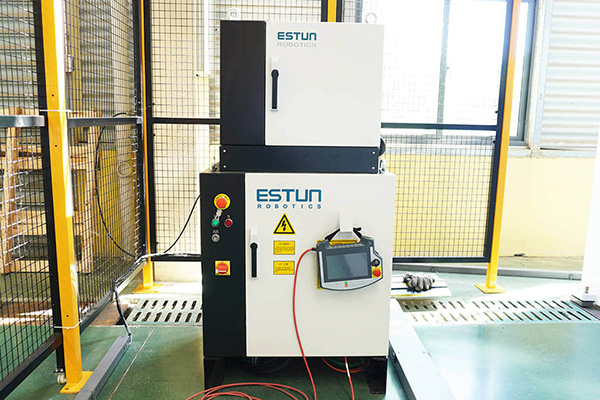
Tooling strategy and repeatable handling are critical for profitable automation
Many buyers compare robot bending and manual bending only at the level of labor cost. That is too shallow. A robotic cell changes several operational disciplines at once.
- Programming becomes more important: offline simulation, bend sequence planning, and collision checking matter much more than in purely manual production.
- Tooling discipline becomes mandatory: tool positions, clamping repeatability, and setup verification must be tightly controlled.
- Material consistency matters more: blanks with strong variation in size, burrs, warp, or protective film behavior are harder to automate reliably.
- Infeed and outfeed planning matters: pallets, separators, conveyors, or stacking zones affect uptime just as much as the robot itself.
- Quality control moves earlier: first-off approval, sensor calibration, and sample verification become essential before running longer unattended sequences.
In other words, automation rewards shops with disciplined upstream and downstream processes. A robotic cell works best when laser cutting, deburring, part identification, and pallet flow are already reasonably stable.
6. ROI: When Does a Robotic Press Brake Pay Back?
Most robotic press brake projects are justified by a combination of labor savings, more stable output, lower scrap, and the ability to run longer unattended periods. In practical market cases, payback often lands around 1.5 to 3 years for repeated production, but the real answer depends on part family stability and how many hours the cell is productively loaded.
Automation ROI improves when you have repeat orders, expensive labor, quality problems caused by handling variation, or demand that regularly exceeds operator capacity. ROI weakens when jobs are highly customized, engineering changes happen every day, or the cell sits idle while operators wait for upstream parts.
7. Which Parts Are Best for Robot Bending?
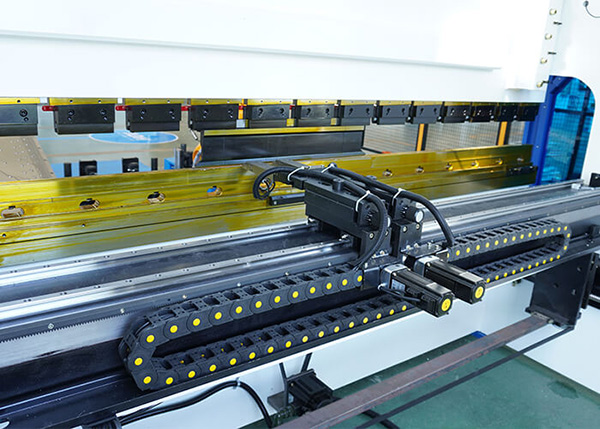
Good automation projects combine repeat parts, stable blanks, and disciplined programming
The best candidates for CNC press brake automation usually share the same characteristics:
- Repeat orders with weekly or monthly recurrence
- Part families with similar tooling and bend logic
- Medium-to-large batch sizes
- Heavy, wide, or awkward parts that are tiring to handle manually
- Multi-bend parts where handling consistency affects angle accuracy or cosmetic quality
Poor candidates include random one-off repairs, unstable prototypes, highly reflective or easily scratched parts without tested grippers, and jobs where upstream blank quality varies too much for unattended handling.
8. How to Decide: A Practical Buyer Framework
Ask these five questions before choosing between manual operation and automation:
- How repeatable is your order mix? Recurring parts are the fuel for automation.
- Where is your real bottleneck? If bending is the slowest operation, automation has more leverage.
- Is labor a strategic risk? If operator hiring is unstable, automation becomes more attractive.
- Can your upstream process support the cell? Stable blanks, labeling, and pallet flow are essential.
- Do you need flexibility or predictability more? Manual shops buy flexibility; automated shops buy repeatability.
If your answers point toward repeated parts, labor pressure, and a quality-driven workflow, a robotic cell is usually worth serious evaluation. If your business depends on fast-turn custom jobs with constant engineering changes, manual bending may still produce a better return today.
Press Brake Automation Quote Checklist
A press brake automation quote should not be based only on tonnage and bending length. The robot, gripper, sheet follower, tooling, safety layout and software depend on the real part flow.
| Quote item | What to prepare | Why it matters |
|---|---|---|
| Part drawings | DXF, STEP, PDF drawings or photos of representative parts | Confirms bend sequence, collision risk, gripper access and tooling |
| Material range | Mild steel, stainless steel, aluminum, thickness and tensile strength | Determines tonnage, tooling, springback and surface protection |
| Blank size and weight | Maximum and common sheet dimensions before bending | Determines robot payload, gripper type and sheet follower requirement |
| Production target | Batch size, shifts per day, monthly volume and target cycle time | Determines whether full automation has enough utilization for ROI |
| Factory layout | Available floor space, infeed/outfeed direction, safety area and voltage | Determines cell layout, conveyors, fences and installation plan |
For early evaluation, send the top 5-10 repeat parts and production target through the press brake quote request. Rucheng can compare a standard CNC hydraulic press brake, CNC press brake with sheet follower, and robotic bending cell before you commit to a higher-investment automation route.
9. FAQ
What is press brake automation?
Press brake automation is a CNC bending system that combines a press brake with a robot, grippers, sheet followers, sensors, conveyors or pallets, and offline programming so repeated sheet metal parts can be loaded, bent and unloaded with less manual handling.
When should a factory choose a robotic press brake cell?
A robotic press brake cell is usually worth evaluating when the factory has repeat parts, medium or large batches, labor pressure, heavy or awkward blanks, stable upstream cutting quality, and a clear need for consistent shift output.
Does a robotic bending cell need sheet followers?
Not every robotic bending cell needs sheet followers, but long panels, large cabinet parts, facade panels and stainless sheets often benefit from synchronized sheet support because it reduces sagging, handling marks and angle variation during bending.
What information is needed for a press brake automation quote?
A useful quote should include part drawings, material and thickness range, blank size and weight, bend sequence, batch size, daily production target, surface protection needs, tooling requirements, controller preference, workshop layout and voltage.
Is press brake automation better than manual bending?
Press brake automation is better for repeated production, stable output and labor efficiency. Manual bending is usually better for prototypes, one-off jobs, urgent changes and high-mix low-volume work where programming time would outweigh the benefit.
10. Conclusion
CNC press brake automation is not a replacement for bending knowledge; it is a multiplier for stable production systems. If your factory runs repeat parts, struggles with labor availability, or needs better consistency on multi-bend work, robot bending can deliver a real advantage in output, quality, and safety. If your work is highly customized and constantly changing, a well-run manual press brake department may still be the most economical choice.
Before automating, compare the economics in our CNC press brake cost by tonnage guide, prepare repeatable programs with CNC press brake programming basics, and plan uptime with the press brake maintenance checklist.
If you are evaluating automation for cabinets, brackets, frames, enclosures, or other repeat sheet metal parts, compare the robotic press brake configuration and contact Rucheng for a practical recommendation on whether a standard CNC press brake or a robotic bending cell fits your production better.
Press brake selection and production resources
Compare the full Rucheng press brake machine range before choosing tonnage, working length, controller, tooling and automation options.
- Electro-hydraulic CNC press brake for high-mix precision bending.
- Robotic press brake for repeat production, automated loading and stable shift output.
- Tandem press brake for long parts, poles, panels and structural work.
- Press brake tonnage calculation, tooling selection and controller selection help confirm the final specification.
- For blank preparation before bending, compare fiber laser cutting machines and plan the cutting-to-bending workflow together.