

Rucheng configures robotic press brake cells that combine CNC hydraulic press brakes, press brake robots, grippers, sheet support, loading tables, unloading stations and safety enclosures for repeat sheet metal parts. Each automated bending cell is planned from drawings, blank size, part weight, cycle target and production volume.
Press Brake Buyer Path
This page is for buyers comparing a robotic press brake system for repeat parts, unmanned bending and stable shift output. For the full model comparison across standard CNC, NC, heavy-duty, tandem and robotic bending, start from the press brake machine hub before requesting a cell layout.
For repeat bending work, assess part consistency, gripper access, cycle time and loading requirements before specifying a robotic cell.
Confirm part repeatability, blank size, bend sequence, robot payload, gripper design, loading method, safety enclosure and cycle target.
Send drawings, annual volume and target cycle time so engineering can judge whether automation is justified.
Request a robotic bending quoteAutomation Fit Check
A robotic press brake is best for repeat sheet metal parts where the bending sequence, blank size and batch volume are stable enough to justify grippers, robot programming and safety cell layout. If the work is mostly short-run repair, prototype bending or highly variable parts, a standard CNC press brake machine is often the better first investment.
| Buyer condition | Robotic press brake fit | What Rucheng needs to quote |
|---|---|---|
| Repeat parts with stable drawings | Good fit because robot paths, grippers and offline programs can be reused. | Part drawings, annual volume, batch size and bend sequence. |
| Multi-shift bending or labor shortage | Strong fit when unmanned hours and consistent output can offset automation cost. | Daily bending hours, target cycle time, operator count and current bottleneck. |
| Large part mix or many one-off jobs | Usually weaker fit unless the parts can be grouped by size, tooling and bending process. | Part family list, tooling standard, material range and changeover frequency. |
| Complex small parts or narrow flanges | Needs careful feasibility review because gripper access and part rotation may limit automation. | Blank size, flange height, inside radius, material thickness and sample photos. |
Electrical cabinets, appliance panels, HVAC parts, brackets, trays, enclosures and repeat sheet metal components.
A robotic cell quote should include the press brake, robot, grippers, tooling, safety enclosure, loading table, programming support and installation plan.
For lower volume work, compare a standard CNC press brake with sheet followers, quick clamps and offline programming before choosing full robotic automation.
Robotic Bending Cell Package
A robotic press brake quote should include more than the bending machine price. The practical cell cost depends on robot payload, gripper design, sheet follower requirements, tooling, safety enclosure, loading method, unloading or stacking method, offline programming and installation support.
| Cell item | Configuration choices | Quote decision |
|---|---|---|
| CNC press brake | Electro-hydraulic CNC press brake, 4-8 axis backgauge, CNC crowning, quick clamping | Tonnage, bending length, daylight, stroke and controller must match the part family. |
| Press brake robot | 6-axis industrial robot with payload and reach selected by blank size and part rotation | Robot selection depends on maximum blank weight, part size and required handling path. |
| Grippers and sheet support | Vacuum grippers, magnetic grippers, mechanical clamps, roller supports or synchronized sheet followers | Surface protection, holes, oil, film and blank flatness decide the handling method. |
| Material flow | Loading table, blank separation, conveyors, output pallets, stacking area or AGV interface | Cell uptime depends on how blanks enter and finished parts leave the bending area. |
| Software and safety | Offline programming, bend simulation, safety fence, light curtain, scanner and interlock system | Layout drawings and safety zone planning are needed before confirming final FOB China price. |
Advanced robotic press brake with intelligent automation and precision control
Discover the revolutionary advantages of fully automated robotic bending for modern manufacturing
Eliminate manual material handling with fully automated robotic loading, bending, and unloading operations
AI-powered adaptive control with real-time angle monitoring ensures consistent quality every bend
Significantly increase output with continuous 24/7 operation and reduced cycle times
Seamlessly integrate with ERP, MES, and Industry 4.0 systems for complete production visibility
Remove operators from hazardous zones with comprehensive safety fencing and collision detection
Minimize labor requirements and reduce operational costs with lights-out manufacturing capability
Understand the advanced components that make our robotic press brake the most sophisticated automated bending solution
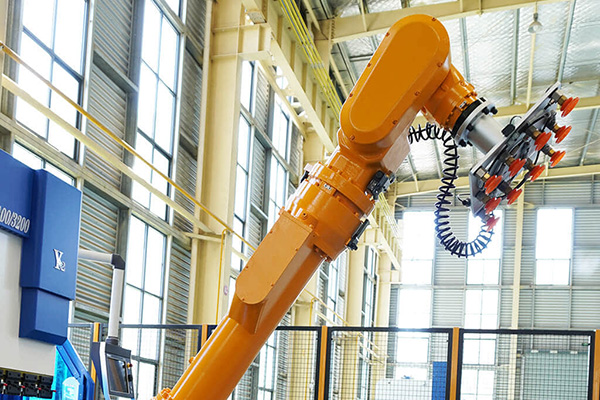
High-precision 6-axis industrial robot with advanced servo drives and absolute encoders. Features adaptive gripping technology, vision-guided positioning, and intelligent path planning for optimal material handling. The robot's high payload capacity and extended reach enable handling of large sheets and complex part geometries.
Advanced artificial intelligence control system with adaptive bending algorithms, real-time angle measurement, and automatic springback compensation. The system continuously learns and optimizes bending parameters based on material characteristics and historical data, ensuring perfect bends every time.

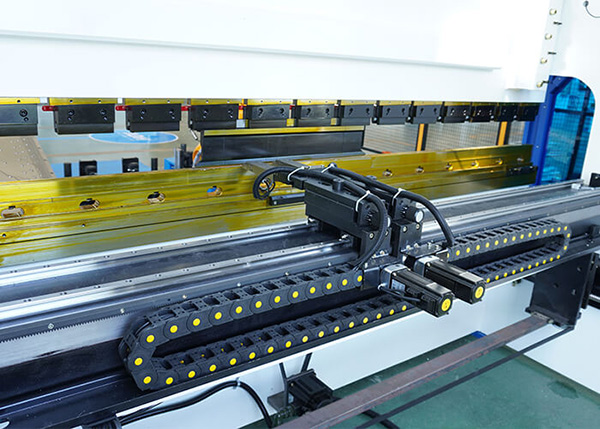
High-resolution 3D vision system with advanced image processing for precise part recognition, orientation detection, and quality inspection. The system guides the robot for accurate part pickup and positioning, while simultaneously performing in-process quality checks for bend angles and dimensions.
Fully automated tool changing system with intelligent tool magazine that stores multiple punch and die sets. The system automatically selects and changes tools based on programmed bending sequences, eliminating manual setup time and enabling rapid transition between different part programs.
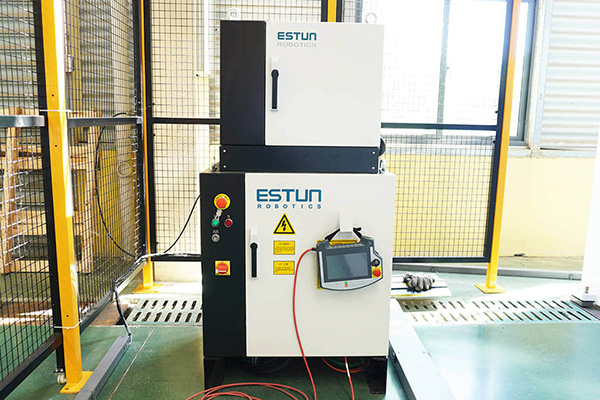
Our robotic press brakes excel in high-volume production environments requiring consistent quality and minimal human intervention
Automated mass production of standardized parts with consistent quality
Precision parts for vehicle chassis, frames, and structural components
Automated production of appliance enclosures, panels, and components
Server racks, IT equipment chassis, and electronic enclosures
Industry 4.0 facilities requiring full automation and data integration
Unmanned night shift operations and weekend production runs
Complex multi-bend parts requiring consistent accuracy
Job shops requiring rapid changeover and flexible automation
Customize your robotic press brake with standard features and optional upgrades for maximum automation capability
Need help designing your automated bending cell?
Contact Our Automation ExpertsUse these resources to confirm machine type, automation level, sheet support, bending force, tooling and upstream cutting workflow before final specification.
Review CNC, NC, tandem, heavy-duty and robotic press brake options.
Compare robotic bending cells, operator-assisted CNC bending and sheet follower options.
Check when synchronized sheet support is enough before buying a full robot cell.
Choose frame type, tonnage, axes, controller and tooling package for hydraulic bending.
Size bending force from material, thickness, length and V-die opening.
Choose punches, V-dies and tooling standards for your parts.
Check opening dimensions for boxes, channels, tall tools and part removal clearance.
Confirm when automated bending should use a robotic press brake cell, CNC bending machine or another forming process.
Match blank cutting capacity with downstream bending production.
Common questions about our robotic press brake systems
Still have questions about automation?
Contact our automation team →Get detailed technical specifications, automation capabilities, ROI calculations, and case studies for our robotic press brake systems. Download our comprehensive automation guide in PDF format.