
Press brake energy consumption is the electricity used over a defined period, measured in kWh. To compare machines, measure the same part batch with the same production boundary, then divide the recorded energy by the number of accepted parts. A motor rating in kW, machine tonnage or an advertised saving percentage cannot replace that measurement. Include setup, repositioning and waiting time when those activities belong to the production job.
This guide provides a suggested measurement record and worked arithmetic for buyers comparing a press brake machine. The numbers below are hypothetical, not measured Rucheng performance or a promise for a particular drive type.
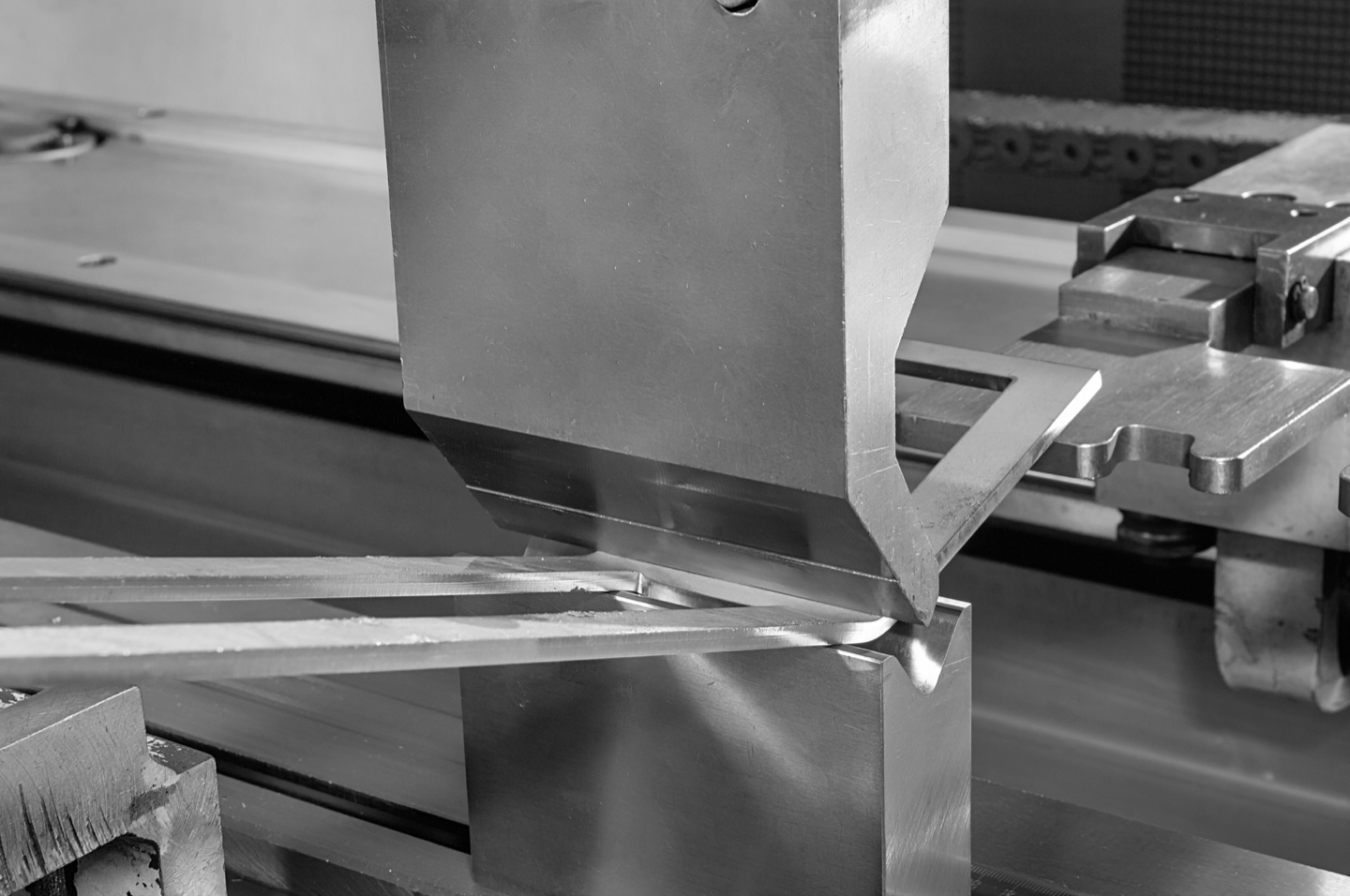
Separate force, power and energy before comparing quotations
| Quantity | What it describes | What it cannot establish |
|---|---|---|
| Pressing force: kN or stated ton-force unit | Mechanical load capacity for bending, subject to machine and tooling limits | Electrical energy for a batch |
| Rated motor power: kW | A motor specification at its stated rating conditions | Average input power of the complete machine |
| Measured input power: kW | Rate of electricity use at the measurement boundary | Batch energy without elapsed time |
| Measured energy: kWh | Electricity accumulated during the recorded interval | Productivity or part quality without an output count |
The U.S. Energy Information Administration explains the power and energy units. For a period with known average input power, energy equals average kW multiplied by hours. Multiplying a nameplate rating by shift hours instead assumes that rating represents constant actual input throughout the shift; that assumption needs evidence.
Keep tonnage and V-die selection as a separate check. An energy comparison does not establish whether the press brake, punch, die or clamping system can carry the intended bending load.
Define what the meter includes
Agree on the boundary before a supplier demonstration. A measurement of only the pump motor is different from the machine electrical inlet; a complete bending cell may also include a robot, tool changer, cooler and separately supplied handling equipment. Record which loads are inside the reading and which are excluded. Do not silently add an unmeasured compressor allocation to a machine-only result.
Use a suitable real-energy meter or power analyzer and retain its identification, measurement interval and accuracy information. Have qualified electrical personnel arrange the measurement under the equipment and instrument instructions. This article is not a wiring procedure. A current reading alone does not determine real input power: the U.S. Department of Energy motor-systems guide explains the roles of voltage, current and power factor.
- Freeze the job. Record drawing revision, material, thickness, bend lengths, bend count, tooling, accepted angle and dimensional tolerances.
- Freeze the operating conditions. Record the program, supplied options, warm-up state, support equipment and enabled standby settings. Follow the actual machine instructions; do not invent a common warm-up time.
- Log start and finish. Save cumulative meter readings and timestamps, plus setup, production and waiting periods. Record interruptions instead of hiding them.
- Count useful output. Record started, accepted, rejected and reworked parts. Use the same acceptance criteria and the same treatment of setup and rework in both trials.
Worked example: a complete batch instead of a motor-nameplate estimate
Assume the following four intervals are consecutive and do not overlap. All readings cover the same machine inlet. The production interval includes approach, forming, return and normal part repositioning. These values demonstrate the calculation only; they are not recommended settings or typical consumption figures.
| Batch interval | Duration (h) | Assumed average input (kW) | Energy (kWh) |
|---|---|---|---|
| Setup and first-piece adjustment | 0.50 | 1.20 | 0.60 |
| Batch production | 2.00 | 3.00 | 6.00 |
| Waiting between operations | 0.75 | 0.80 | 0.60 |
| Powered standby after the batch | 0.75 | 0.20 | 0.15 |
| Total recorded window | 4.00 | Varies by interval | 7.35 |
If the run starts 125 parts and accepts 120 without further rework, the energy per accepted part is 7.35 / 120 = 0.06125 kWh. Dividing by 125 would give 0.0588 kWh per started part, a different measure. Average input over the full window is 7.35 / 4 = 1.8375 kW.
At an assumed energy-only rate of USD 0.12/kWh, this window costs 7.35 × 0.12 = USD 0.882, or USD 0.00735 per accepted part. This excludes demand charges, fixed fees, taxes, labor, tooling and other production costs. Apply the actual tariff; a momentary kW peak is not automatically the utility's billed demand.
For a production-only comparison, the example gives 6.00 / 120 = 0.050 kWh per accepted part. Label it accordingly. It must not be compared with another machine's full-window result as though both include setup and standby.
Compare energy together with throughput and acceptance
Suppose another trial uses 6.60 kWh, makes 120 accepted parts and takes 5.00 hours on the same defined boundary. Its result is 0.055 kWh per accepted part, lower than the first trial, but its full-window output is 24 parts/h rather than 30 parts/h. The energy-only cost is lower; the overall production choice still needs the throughput requirement, staffing and other costs. Neither invented trial establishes a winning machine.
| Comparison field | Keep consistent or explain the difference |
|---|---|
| Part and quality | Same drawing, material, bends and acceptance criteria; report scrap and rework |
| Energy boundary | Same included auxiliaries; identify external supplies separately |
| Time boundary | Production-only, whole batch or shift; include the same categories of delay |
| Measured comparison results | Total kWh, accepted parts, kWh per accepted part and accepted parts per hour |
| Repeated trial results | Retain repeat runs and explain changes in mix, temperature, setup and interruptions |
Check the named drive system instead of assuming a saving percentage
Hydraulic machines do not all control their pumps in the same way. TRUMPF describes an optional on-demand drive for the TruBend 8000 that adjusts motor speed to press-beam movement. LVD describes flow regulation in the Easy-Form turbo-hydraulic system. These named designs are reasons to inspect the actual configuration; they do not prove a universal whole-machine saving or zero electricity use whenever the ram stops. See the TRUMPF release and LVD product description.
A servo motor may drive a hydraulic pump or a mechanical transmission. The electric press brake manufacturer comparison identifies documented model families. For an energy claim, also ask for the reference machine, job, measured boundary, elapsed time, accepted output and test report. Catalogue percentages from different trials are not a common comparison scale.
What to include in a supplier trial record
Request the machine model and drive options, part drawing and material, meter and measurement boundary, raw start/end kWh, timestamps, operating states, accepted/rejected counts and the calculated results. Attach the acceptance report so that the energy figure refers to parts that meet the drawing. If an accessory is unmetered, mark it as excluded rather than assigning an unsupported consumption figure.
Use the factory acceptance-test checklist to organize the wider trial. When asking Rucheng for a press brake quotation, include the production mix and whether a machine-only or complete-cell energy comparison is required. The supplied drive configuration and any measured performance must be confirmed for the actual offer.
Press brake energy questions
Can I calculate daily consumption from the motor kW rating?
Only as an explicitly assumed scenario. Actual input changes with load, operating state and auxiliaries. Use measured batch kWh or time-weighted measured average input power for an operating comparison.
Is kWh per bend better than kWh per part?
Both can be useful when their boundaries are clear. Bends differ in length, load and handling, while parts differ in bend count. For a repeated drawing, accepted parts provide a useful production denominator; for different drawings, retain the part mix and avoid treating unlike bends as equivalent output.
Does a stopped pump mean the whole machine uses no electricity?
No. Controls and other enabled equipment may still draw power. Identify what stops, what remains powered and what the meter includes; verify the actual standby energy for the supplied configuration.
Can a lower kWh result prove a faster payback?
No. Energy is one cost component. A useful comparison also needs accepted output, elapsed time, labor, maintenance, purchase cost and the actual electricity tariff. Do not turn an energy-only example into a guaranteed return on investment.