
A complete sheet metal machine setup usually includes four core processes: cutting flat blanks, punching holes or forms, bending parts into shape, and welding assemblies. For many factories, the practical equipment set is a 3kW fiber laser cutting machine, a 30 ton CNC punching machine, a 100-160 ton press brake, and a 1.5-3kW handheld laser welding machine. The right configuration depends on material type, thickness range, sheet size, hole density, bend length, batch size, and the level of automation required.

Quick Answer: What Sheet Metal Machines Does a Factory Need?
Most sheet metal factories need a cutting machine, a forming machine, and a joining process. A fiber laser cutting machine handles flexible profiles and small-batch changes. A swing beam shearing machine or guillotine shearing machine prepares rectangular blanks when straight cutting volume is high. A CNC punching machine makes repeated holes, louvers, knockouts, embossing and forms faster when the features repeat. A press brake bends the flat blanks into enclosures, brackets, cabinets, trays and panels. A laser welding machine joins corners, seams and frames with less heat input than many traditional welding methods.
For a factory producing electrical cabinets, control panels, HVAC parts, general covers, brackets or equipment housings, a practical first line is: one 3kW 1500 x 3000 mm fiber laser cutting machine, one 30 ton CNC punching machine, one 100T/3200 mm or 130T/3200 mm electro-hydraulic CNC press brake, and one 3kW handheld laser welding machine. Add a QC12Y swing beam shear for economical sheet blanking or a QC11Y guillotine shear for thicker plate as cutting volume grows. If the product range includes cylinders, tanks, curved guards, deep drawn parts or stamping work, plan the matching plate rolling machine and four-column hydraulic press early instead of treating them as unrelated later purchases.
Sheet Metal Factory Workflow: From Sheet to Finished Part
The typical sheet metal workflow starts with raw sheet storage and nesting. The cutting process creates the blank outline and large internal features. Punching adds repeated holes, forms and knockouts when the part design makes tooling efficient. Bending turns the flat blank into a three-dimensional shape. Welding, grinding, finishing, assembly and inspection complete the part.
The machines should be selected as a system. A fast laser cutting machine can create a bottleneck if the press brake has too few axes or the factory has no organized tool library. A powerful press brake may be underused if cutting and punching cannot feed accurate blanks. Good equipment planning balances capacity across all steps.
Core Sheet Metal Machines and What They Do
| Machine | Main Job | Good Fit | Key Buying Checks |
|---|---|---|---|
| Fiber laser cutting machine | Cuts flat sheet profiles, slots, holes, windows and irregular shapes from CAD nesting programs | High-mix parts, clean edges, 0.8-12 mm sheet depending on power and material | Power, table size, open vs enclosed design, exchange table, laser source, cutting gas, chiller and dust collector |
| CNC punching machine | Punches holes and forms louvers, embosses, knockouts, countersinks and repeated patterns | Electrical enclosures, perforated panels, repeated hole patterns and formed sheet features | Tonnage, sheet size, turret stations, repositioning, forming tools, clamps and software |
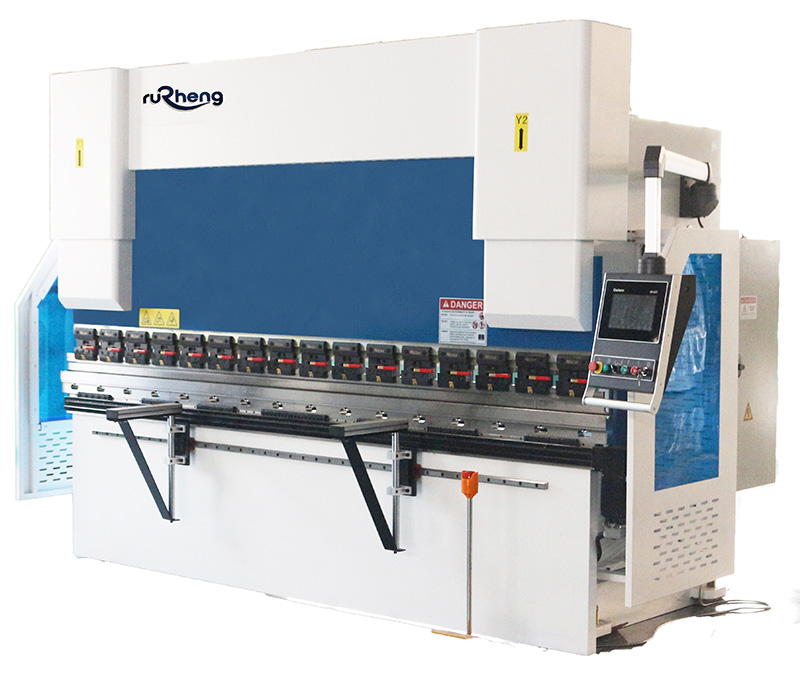
| CNC press brake | Bends flat blanks into boxes, cabinets, brackets, trays, channels and frames | Most sheet metal products after cutting or punching | Tonnage, bending length, Y1/Y2 control, back gauge axes, crowning, controller and tooling |
| Laser welding machine | Welds corners, seams, frames and thin sheet assemblies with concentrated heat input | Cabinets, stainless parts, mild steel assemblies, covers and frames | Power, material thickness, wire feeder, wobble head, safety enclosure, gas supply and operator training |
| Plate rolling machine | Rolls flat plate into cylinders, cones, arcs, tanks, pipes and curved covers | Pressure vessels, HVAC ducts, tanks, curved guards and structural rolling work | Roll length, plate thickness, minimum diameter, 3-roll vs 4-roll design, pre-bending and CNC control |
| Four-column hydraulic press | Applies controlled forming force for deep drawing, stamping, blanking, straightening and press fitting | Automotive parts, appliance panels, kitchenware, deep drawn housings and high-force forming | Tonnage, table size, stroke, daylight, speed, hydraulic control, tooling and safety guarding |
1. Fiber Laser Cutting Machine: Flexible Blanking for Modern Sheet Metal
A fiber laser cutting machine is usually the center of a modern sheet metal factory because it can switch part designs quickly without hard tooling. For a 1500 x 3000 mm sheet format, 3kW is a common entry-to-mid power choice for electrical cabinets, machine covers, stainless panels and general fabrication work.
Choose an open single table machine when budget is tight and loading volume is moderate. Choose a double exchange table when the factory needs continuous loading and unloading while the machine cuts. Choose a fully enclosed fiber laser cutting machine when safety, smoke control and customer audits are important. If the factory cuts both sheet blanks and tube profiles, compare a plate and tube integrated laser cutting machine before buying separate equipment. For more detail on power selection, see our fiber laser cutting machine power guide.
- Material range: confirm carbon steel, stainless steel, aluminum, galvanized sheet and maximum thickness for each material.
- Power: 3kW is practical for many 1-8 mm sheet applications; thicker or faster cutting may require 6kW or higher.
- Table format: 1500 x 3000 mm is common, but 2000 x 4000 mm or larger may be needed for panels and long parts.
- Gas and air system: oxygen, nitrogen and compressed air affect edge quality and operating cost.
- Automation: exchange table, loading system and nesting software decide real output more than laser power alone.

2. CNC Punching Machine: Fast Holes, Louvers and Repeated Features
A CNC punching machine is not replaced by a laser in every factory. Laser cutting is flexible, but punching is often faster and more economical for repeated holes, louvers, knockouts, ventilation patterns, countersinks, bridge forms and embossing. In a production environment, a 30 ton punching machine is a common specification for many sheet metal parts.
Electrical enclosure factories often use both laser cutting and punching. The laser handles outlines and flexible shapes; the punching machine handles repeated features and forms that would be slower or impossible to create with laser cutting alone. The best choice depends on hole density, sheet thickness, required forms and production volume.
- Tonnage: confirm the largest hole diameter and material thickness combination.
- Tool stations: more stations reduce setup time for mixed part families.
- Forming tools: louvers, knockouts, embosses and countersinks should be specified before quotation.
- Sheet handling: clamps, brush table, repositioning and scrap control affect surface quality and uptime.
- Software: nesting and tooling libraries keep repeated jobs consistent.

3. Press Brake Machine: Bending Capacity and Accuracy
The press brake converts flat blanks into finished shapes. For general sheet metal factories, 100T/3200 mm and 130T/3200 mm are common choices because they cover many 3 meter bending jobs in mild steel, stainless steel and aluminum. But tonnage should still be calculated from material thickness, V-die opening, bend length and tensile strength.
For new factories, an electro-hydraulic CNC press brake is usually the safest long-term choice when accuracy, repeatability and mixed jobs matter. A torsion bar NC machine can be acceptable for simpler parts and lower budget. Use our hydraulic press brake machine guide and press brake force calculation guide before finalizing tonnage.
- Type: torsion bar NC for basic work, electro-hydraulic CNC for higher accuracy and repeatability.
- Tonnage and length: common factory choices include 100T/3200 mm, 130T/3200 mm and 160T/3200 mm.
- Axes: Y1/Y2, X and R axes are a practical baseline; Z1/Z2 helps frequent part changes.
- Crowning: CNC crowning improves long bends and mixed thickness production.
- Tooling: standard punches, dies, quick clamps and special tools must match actual drawings.
4. Laser Welding Machine: Clean Joining for Cabinets and Thin Sheet
A laser welding machine is useful when the factory needs neat seams, lower heat input, faster welding speed and reduced post-grinding on cabinets, covers, stainless parts and thin sheet assemblies. A 3kW handheld laser welding machine can cover a wide range of mild steel, stainless steel and aluminum welding tasks when matched with proper shielding gas, wire feeding and operator protection.
Before buying, confirm whether the factory needs welding only or a multifunction handheld system with welding, cleaning and cutting modes. Also confirm whether wire feeder is needed for gaps or thicker joints. Laser welding safety must be planned seriously, including protective eyewear, training, fume extraction and controlled work area.
Example Factory Setups by Product Type
The same sheet metal machines can be configured differently depending on the parts. The table below shows practical starting points for common factories.
| Factory Type | Typical Parts | Recommended Starting Machines | Upgrade Path |
|---|---|---|---|
| Electrical enclosure factory | Cabinets, control panels, doors, mounting plates, ventilation covers | 3kW double table fiber laser, 30 ton CNC punching machine, 100T or 130T CNC press brake, 1.5-3kW laser welder | Hardware insertion, deburring, powder coating line, automated storage |
| General fabrication shop | Brackets, covers, machine guards, equipment frames, stainless panels | 3-6kW fiber laser, 100-160T press brake, laser welder, optional punching machine | Larger table, robotic welding, heavier press brake, offline programming |
| HVAC and duct workshop | Duct sections, flanges, elbows, reducers, light-gauge galvanized parts | Shearing or laser cutting, compact press brake, duct forming machines, spot/laser welding | Dedicated duct line, coil feeding, automated forming |
| High-mix precision sheet metal factory | Small batches, many drawings, frequent material changes | Enclosed fiber laser, CNC punching with many stations, multi-axis CNC press brake, laser welding | ERP/MES integration, automated loading, tool management and inspection systems |
Buyer Checklist Before Requesting a Quotation
A good quotation requires more than machine names. Send the supplier enough information to size the machines correctly and avoid overbuying unused functions or underbuying capacity.
- Material list: mild steel, stainless steel, aluminum, galvanized sheet and tensile strength if available.
- Thickness range: minimum, common and maximum thickness for cutting, punching, bending and welding.
- Sheet size: standard sheet format such as 1500 x 3000 mm, plus any oversize panels.
- Part drawings: at least 5-10 representative drawings showing holes, bends, flanges and welds.
- Production volume: pieces per day or per month, plus shift pattern.
- Tolerance requirements: cut edge, hole position, bend angle, weld appearance and final assembly fit.
- Factory utilities: voltage, frequency, compressed air capacity, gas supply and floor space.
- Automation target: manual loading, exchange table, automatic loading, offline programming or future expansion.
Factory Layout and Material Handling
Machine capacity only matters if material can move efficiently. A simple layout places sheet storage near cutting, then moves blanks to punching or bending, then welding and finishing. Heavy sheets need forklift or crane access. Long bent parts need front support and enough space around the press brake.
Avoid placing machines only by available floor space. Plan operator walking distance, pallet locations, scrap bins, gas bottle or nitrogen generator position, chiller ventilation, fume extraction and finished goods flow. A clean layout reduces handling damage and makes production easier to scale.
Quality, Safety and Compliance Notes
Sheet metal production involves cutting energy, moving rams, punching force and welding light. The equipment package should include guarding, emergency stops, interlocks, fume extraction and clear operating procedures. OSHA general machine guarding requirements in 29 CFR 1910.212 are a useful reference for machine risk thinking, while the general sheet metal process overview helps define cutting, bending and forming operations.
For quality control, prepare inspection rules before machines arrive. Check cut size, hole position, burr level, bend angle, flatness, weld appearance and assembly fit. A first-article inspection checklist prevents production from repeating the same error across an entire batch.
Sheet Metal Machines FAQ
What machines are needed for a sheet metal factory?
A basic sheet metal factory usually needs cutting, bending and welding equipment. Many modern factories use a fiber laser cutting machine, a CNC press brake and a laser welding machine. If the parts have repeated holes, louvers or knockouts, a CNC punching machine is also valuable.
Should I buy a laser cutting machine or punching machine first?
Buy a fiber laser cutting machine first if your parts change often and have many profile shapes. Buy or add a punching machine when repeated holes, louvers, embossing, knockouts or high-volume perforation patterns are common. Many enclosure factories use both machines because they solve different problems.
Is a 3kW laser cutting machine enough for sheet metal production?
A 3kW fiber laser cutting machine is enough for many 1500 x 3000 mm sheet metal applications, especially 1-8 mm mild steel, stainless steel and aluminum work depending on speed and edge quality requirements. Thicker materials, very high output or frequent plate cutting may need 6kW or higher.
What press brake size is common for a new sheet metal factory?
Common starting sizes include 100T/3200 mm, 130T/3200 mm and 160T/3200 mm. The right size depends on material thickness, bend length, V-die opening and tensile strength. The factory should calculate tonnage from actual drawings before ordering.
Can one supplier provide the full sheet metal machine line?
Yes, a supplier can provide laser cutting, punching, press brake and laser welding equipment as one package. This is useful when the buyer wants matched capacity, unified training, spare parts planning and one engineering team responsible for the full process.
What information should I send to get an accurate quotation?
Send material type, thickness range, sheet size, representative drawings, production volume, tolerance needs, voltage, floor space and automation requirements. For bending, include the longest bend and thickest regular material. For cutting and punching, include hole patterns and sheet utilization targets.
Conclusion: Build the Line Around Real Parts
The best sheet metal machine setup is not the largest or most expensive package. It is the machine combination that cuts, punches, bends and welds your regular parts with the least rehandling, stable quality and enough capacity for future growth.
If you are planning a factory with a 3kW laser cutting machine, 30 ton punching machine, 100-130 ton press brakes and a 3kW laser welding machine, send Rucheng your drawings, materials, thickness range, voltage and target output. Our engineering team can recommend a practical configuration and prepare a complete quotation.
Request a Sheet Metal Machine ProposalPlan the complete sheet metal production line
Most application projects need cutting, bending and downstream assembly to work together. Start with the fiber laser cutting machine range for blanks and profiles, then match the parts with the right press brake machine for bending.
- Laser power selection helps size cutting capacity by material and thickness.
- Press brake tonnage calculation helps size bending capacity by material, length and V-die opening.
- Sheet metal factory setup connects laser cutting, punching, shearing, bending and forming equipment into one workflow.