
In metal fabrication, the press brake is the machine responsible for bending sheet metal into accurate brackets, panels, cabinets, channels and structural components. If you need the core ram, punch, die and back gauge sequence first, start with how a bending machine works. Then use this guide to compare CNC hydraulic, NC torsion-synchro, electric, hybrid, heavy-duty and tandem press brakes by workload, accuracy, tonnage, budget and buyer fit.
| Press brake type | Best-fit workload | Rucheng comparison path |
|---|---|---|
| Electro-hydraulic CNC | General precision bending, mixed sheet metal jobs and repeatable production. | Electro-hydraulic press brake |
| Heavy-duty hydraulic | Thick plate, large tooling, structural fabrication and high tonnage work. | Heavy-duty press brake |
| Tandem synchronized | Long poles, panels, frames and parts beyond one standard working length. | Tandem press brake |
| Buyer situation | Recommended press brake type | Why this type fits | Next step |
|---|---|---|---|
| First machine, simple bends, limited budget | NC torsion-synchro press brake | Lower purchase cost and simple operation for standard sheet metal bending. | Check torsion-synchro model |
| Mixed parts, repeat orders, tighter angle control | Electro-hydraulic CNC press brake | Better ram synchronization, controller options and multi-axis back gauge support. | Compare CNC model |
| Thick carbon steel or stainless steel plate | Heavy-duty hydraulic press brake | Higher frame strength, larger cylinders and tooling capacity for high tonnage work. | Calculate tonnage first |
| Long poles, panels, doors or structural profiles | Tandem press brake | Two synchronized machines extend bending length while keeping bend alignment controlled. | Review tandem solution |
| High-volume repeat production with fewer operators | Robotic press brake cell | Automation improves repeatability and labor efficiency when part families are stable. | Review robotic bending |
1. Mechanical Press Brakes
The mechanical press brake is the "grandfather" of modern bending. While less common in new sales today, they are still found in many older shops.
How it works:
These machines use a flywheel that stores energy. When the operator engages the clutch, the energy is transferred to a crank, which moves the ram up and down.
Key Characteristics:
- Speed: They are incredibly fast.
- Stroke: The stroke is fixed; the punch must complete a full cycle. It generally cannot be stopped mid-stroke, which raises safety concerns compared to modern standards.
- Accuracy: Generally lower accuracy compared to CNC hydraulic or electric machines.
2. Hydraulic Press Brakes
Currently the most common type of press brake in the industry, hydraulic brakes are the workhorses of fabrication.
How it works:
These machines utilize synchronized hydraulic cylinders to move the ram. Oil pressure drives the movement, allowing for immense power.
Key Characteristics:
- Power: They offer the highest tonnage capacities (capable of bending very thick plate).
- Control: Safer than mechanical brakes because the ram can be stopped and reversed at any point.
- Versatility: Adaptable to a wide range of metal thicknesses and lengths.
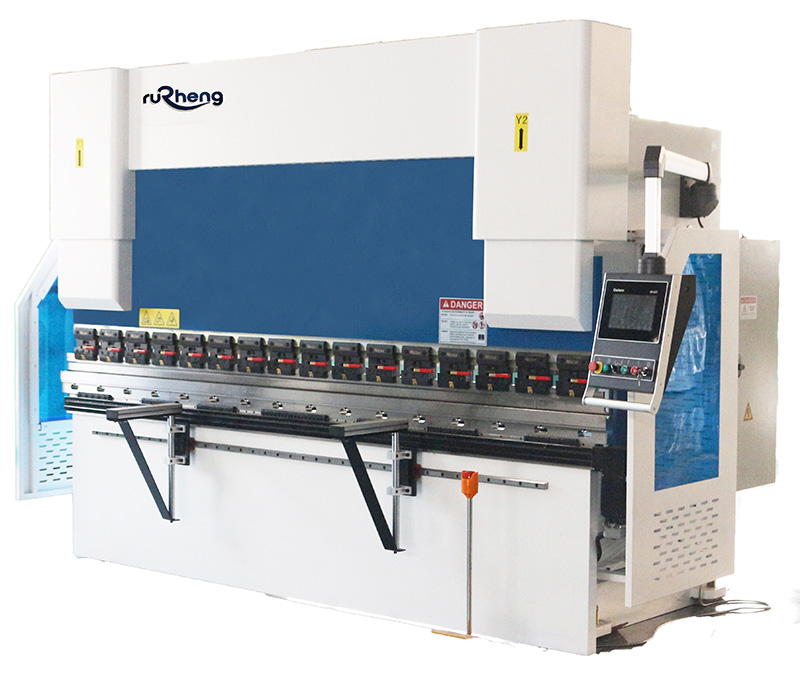
The Downside:
They require hydraulic oil, which means potential leaks, seal changes, and issues with oil viscosity changing as the machine warms up (thermal drift).
3. Electric (Servo-Electric) Press Brakes
As the industry moves toward sustainability and precision, electric press brakes are rapidly gaining market share.
How it works:
Instead of hydraulics, these machines use servo motors to drive the ram. This is often done via a ball screw or belt-and-pulley system.
Key Characteristics:
- Precision: Extremely high accuracy and repeatability (often within microns).
- Energy Efficiency: They only consume energy when the ram is moving. This is known as "Green" technology.
- Maintenance: No oil, no filters, and no seals to replace.

4. Hybrid Press Brakes
Can't decide between the power of hydraulics and the efficiency of electric? Enter the Hybrid.
How it works:
A hybrid press brake uses a hydraulic system, but the pump is driven by a servo motor. The motor only runs when bending is required.
Key Characteristics:
- Best of Both Worlds: You get the tonnage capacity of hydraulics with the energy savings and speed of servo-electrics.
- Reduced Oil: They use significantly less oil than standard hydraulic machines.
- Quiet Operation: Much quieter than standard hydraulics because the pump isn't idling constantly.
5. Pneumatic Press Brakes
These are niche machines, typically used for very specific applications.
How it works:
They utilize air pressure to drive the ram.
Key Characteristics:
- Speed: Very fast cycle times.
- Tonnage: Very low tonnage.
- Usage: Only suitable for bending small, light-gauge parts.
Summary: The Key Differences
To help you visualize the trade-offs, here is a quick comparison:
| Feature | Hydraulic | Electric | Hybrid | Mechanical |
|---|---|---|---|---|
| Tonnage | High (Unlimited) | Low to Medium | Medium to High | Medium |
| Accuracy | Good | Excellent | Excellent | Fair |
| Energy Use | High (Pump idles) | Low (On-demand) | Low (On-demand) | Medium |
| Maintenance | High (Oil/Seals) | Low | Medium | Medium (Mechanical wear) |
| Cost | Moderate | High | High | Low (Used market) |
Which one should you choose?
- Hydraulic If you need to bend thick steel plate and need heavy tonnage (100+ tons).
- Electric If you are bending thinner, complex parts where precision is paramount and you want to lower your electricity bill.
- Hybrid If you want energy efficiency but still need the force capabilities of a hydraulic system.
Conclusion
Choosing the right press brake depends on your specific application requirements, budget, and production needs. At Rucheng Technology, we offer a comprehensive range of press brake machine types including hydraulic, electric, and hybrid models. Our expert team can help you select the perfect solution for your metal fabrication needs.
For standard bending work where purchase price, simple operation and low maintenance are the main priorities, start with the torsion-synchro NC press brake and compare it with higher-axis CNC options only when the job mix requires faster changeover or tighter tolerance.
Send press brake quote specs to discuss your requirements and get a personalized recommendation.
Our Press Brake Products
Explore our range of high-quality press brake machines designed to meet various industrial needs:
Electro-Hydraulic Press Brake
CNC controlled with high precision and efficiency
Torsion Synchro Press Brake
Synchronized torsion bar for consistent bending
Heavy Duty Press Brake
High tonnage for thick plate bending
Tandem Press Brake
Extended length for large workpieces
Robotic Press Brake
Automated bending with robotic integration
Need help choosing the right press brake for your material, length and budget?
Send Press Brake SpecsFree sizing tool before choosing a type
Machine type should be selected after the required bending force is known. Use the press brake bending calculator to estimate bending force, inside radius, V-die opening and minimum flange before comparing NC, CNC, heavy-duty or tandem machines.
FAQ: choosing a press brake type
Which press brake type is best for general sheet metal fabrication?
For most general sheet metal fabrication, a hydraulic CNC press brake is the practical choice because it offers flexible stroke control, broad tonnage range, accessible tooling and good purchase cost.
When should I choose an electric or hybrid press brake?
Choose an electric or hybrid press brake when the work requires high repeatability, frequent setup changes, lower energy use, cleaner operation or higher production speed on thin to medium sheet metal.
What information is needed to compare press brake types?
Send material grade, thickness range, maximum bend length, drawings, tolerance, batch size, tooling needs, workshop power and budget so Rucheng can compare hydraulic, electric, hybrid and tandem press brake options.
How do heavy-duty and tandem press brakes differ from standard hydraulic press brakes?
Heavy-duty press brakes are selected for thick plate, high tonnage and large tooling loads. Tandem press brakes are selected for very long workpieces that need two synchronized machines. Standard hydraulic or electro-hydraulic CNC press brakes fit most normal sheet metal bending.
Which press brake type is best for a limited budget?
For a limited budget, an NC torsion-synchro press brake is usually the entry point for simple bending. If the work needs higher accuracy, faster setup and multi-axis back gauge control, compare it with an electro-hydraulic CNC press brake before buying.
Press brake selection and production resources
Use the main press brake machine guide before choosing tonnage, working length, controller, tooling and automation options.
- Electro-hydraulic CNC press brake for high-mix precision bending.
- Heavy-duty press brake for thick plate and high-tonnage hydraulic bending.
- Robotic press brake for automated bending cells and repeat production.
- Tandem press brake for long parts, poles, panels and structural work.
- Press brake tonnage calculation, tooling selection and controller selection help confirm the final specification.
- For blank preparation before bending, compare fiber laser cutting machines and plan the cutting-to-bending workflow together.